Hawaiian South Shore January 2026 Newsletter - Sugarcane Season, Member Spotlight & More
In This Issue
Sugarcane Season
A Memory from Nakagusuku
Every January, my mind goes back to the sugarcane fields of Nakagusuku—the village in Okinawa where my family is from.

The sound of blades cutting stalks. The smell of the earth. My grandfather, always first in the field before anyone else showed up. And at the end of each harvest week, something I didn't fully appreciate until years later.

There's a word in Okinawa—yuimaru—that shaped everything about how we worked and celebrated together. And there's a reason I felt instantly at home when I came to Hawaii over 35 years ago.
The music, the dancing, the food—and a surprising discovery I made while writing this.
Read the Full Story →Member of the Month
Kumu

1. Tell us about yourself - what do you do for work or what business do you run?
I worked as an auditor when I came out of college, but have spent the last 14 years working for the government. Currently, I work for the City and County of Honolulu.
3. How did you first hear about Hawaiian South Shore?
I met David 20+ years ago at Kewalos and thought it was really cool to know someone that owned a surf shop! At the time I was a poor college student getting deals on used surfboards from friends. My goal after I graduated and got a "real job" was to buy a new board from Dave. With my first pay check—a hand-shaped board by Hap Jacobs! Since then I think I've been hooked and shopping there ever since. By the way, I still think it's cool to know people that own surf shops.
4. Why do you love surfing? How does it fit into your life?
Before work and kids I used to have a lot of different hobbies. Surfing is one of the few hobbies that has stuck over the years. It's a great outlet for me after a long week at work. I hope everyone can find a hobby for self care and therapy—there are too many surfers already - LOL!
5. What's the last board or piece of gear you got from us?
My last purchase was a 6'4 Mini Mid 6, aka my 'Unko' shortboard. Board works great, this is my second one, my first one was in black construction and I wanted the red to unlock the low end of the design. I'm using the Lost 5-fin set in large—quads if the waves are good, or thruster if the waves aren't lining up.
6. If a friend asked you for gear advice, what's one thing from Hawaiian South Shore you'd recommend and why?
It's winter now and if you're stuck surfing in town like me (I got young kids and can't disappear for the time it takes to get to/from the country), HSS has the goods to keep you stoked in the water. If you longboard any of the logs or Thunderbolt Red boards will connect the dots for long rides, even when it's barely breaking. For midlength I'd do any of hull models like the Outlier—those convex bottoms grab whatever power is out there. For a shortboard can't beat the Sweet Potato.
7. What keeps you coming back to Hawaiian South Shore?
Surfboard selection. When I got asked to do this I started counting the boards I've bought over the years from HSS and got to 25 pretty fast... then remembered another 5 boards while I was in the shower. So at least 30 boards but probably more like 40—yikes! So many magic boards on that list: Xanadu Wave Rocket by Surtech, Hypto Krypto before Hayden Shapes went the mass route and only Dave was bringing them in. More recently on my magic board list are several from Lost—Cobra Killer, Puddle Jumper HP, RNF, and Smooth Operator. From FireWire—Special T, Seaside and Beyond, and Sunday. Then from Thunderbolt, the Mid6 line.
8. What would you tell someone who's thinking about shopping at Hawaiian South Shore for the first time?
Support your local surf shop! Dave has a good eye for innovation and quality, so you can count everything in his shop to be well curated. Even the HSS line (rashguards, bags, towels...) is well thought out, designed and executed.
9. What's something you're working on or excited about right now?
I've been trying to get in better shape so I can get more out of my surf sessions. Without my boards growing in size. I'm also hoping my kids get into surfing—would love to do it without sacrificing too much of my surf time.
Mahalo for being part of our ohana, Kumu!
Featured Product
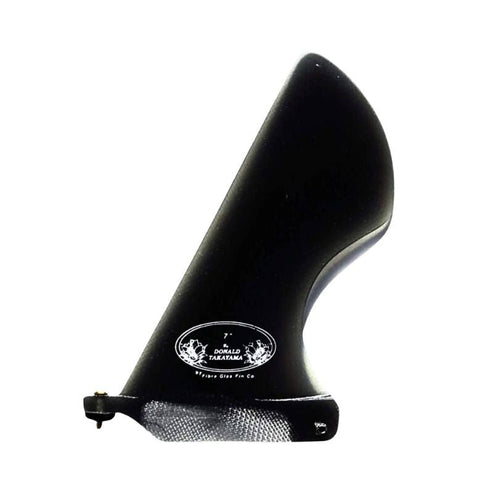
Takayama Halo Center Fin
A Fin That's Earned Its Reputation
For over 20 years, the Takayama Halo Center Fin has been Hawaiian South Shore's #1 selling fin. That's not marketing—that's two decades of longboarders coming back for the same fin because it simply works.
Donald Takayama designed this fin to solve a real problem: how do you get quick pivot response for direction changes and the hold you need for committed nose rides? Most fins make you choose. This one doesn't.
Why It Works
The bottom two-thirds uses an upright pivot-style template for quick turns. The top third rakes back, creating resistance that holds your board steady when you walk to the nose. You get maneuverability without sacrificing control.
Built to Last
Every Halo fin is handcrafted by Larry Allison in California—the same craftsman who's been making Donald Takayama's templates for over 30 years.
Compatibility
Optimized for longboards 8'6" and above. Works well on mid-lengths 7'6" to 8'6". Can be ridden as a single fin or in 2+1 configuration with matching Halo side fins.
Shop Takayama Fins →Surf Tips
How to Surf Better Part 7 of 9: Choosing the Right Fins

Written by Matt Rode (Surfline's head of Maps to Nowhere series)
Once you have chosen the right board for the conditions and your abilities, it is important to also match that board with the right fins. There are four main fin clusters that are used on surfboards, ranging from single fins (slowest and most "retro," but provide a lot of hold and a classic feel) to thrusters (modern three-fin setup) and quads (a modern tweak on the twin fin).
Fin Characteristics
Single fins provide the most hold while trimming; twin fins are fastest but loosest; quads provide extra control off the bottom; and thrusters are the ultimate compromise between control and maneuverability.
Alternative Setups
The 2+1 setup bridges the gap between thruster performance and single fin feel. The reverse 2+1 (twin with center stabilizer) is great for smaller waves when you need to create your own speed but still want to rip.
Fin Size & Wave Size
Counterintuitively, larger fins work better in smaller waves (more drive and speed), while smaller fins can work in powerful surf. Check your fin company's weight recommendations to stay in the appropriate range.
Modern Templates
Three basic types—neutral (best all-around), pivot (tighter turning radius), and carve/rake (better for big, drawn-out carves). The right set of fins can turn a bad board into a magic one!
Read Full Guide →Featured Board
The Harley Ingleby Moe

The Board That Earned Its Spot
Since its release in 2022, the Harley Ingleby Moe has become one of Hawaiian South Shore's top-selling boards. In just three years, it's earned a reputation that usually takes a decade to build.
Surfers keep choosing the Moe because it solves a common frustration: wanting to ride something shorter without losing the paddle power that actually gets you into waves. The Moe's design shifts volume back under your chest, making it easier to paddle while enhancing foot placement toward the tail for better control.
Why It Works
The pulled-in outline and wide tail give you smooth rail-to-rail transitions without feeling sluggish. It performs honestly in a range of conditions—knee-high to 3' overhead—and doesn't pretend to be something it's not.
Size Range
7'2" to 8'0" with widths around 22" to 22½". The 7'2" offers 49.4 liters for precision; the 8'0" provides 60 liters for more float and stability.
Discover the Moe →Worth Knowing
The Science Behind Surf Scoring

I came across an interesting video recently where Dr. Cliff Kapono breaks down a peer-reviewed study on what actually scores highest in professional contests. Our resident surf historian Matt Rode helped translate the science into plain language—and the findings surprised me.
What the Research Found
The study analyzed tens of thousands of waves scored in professional events. Waves with aerials scored an average of 1.9 points higher than waves without—a significant edge when heats are often decided by less than a point.
The Numbers
- Turns only: 5.1 average
- Barrel rides: 6.8 average
- Waves with airs: 7.4 average
But Here's What's Interesting
The study also found that longer bottom turns correlated with higher scores. That's not an air-game stat—that's power surfing. Surfers known for extended bottom turns (Ethan Ewing, Tom Curren, Mick Fanning) have remained highly competitive without relying on aerials.
The Takeaway
Good surfing still wins. Airs help, but they don't replace solid fundamentals. The complete competitive surfer combines powerful rail work with variety—and that's probably true whether you're competing or just trying to get more out of your sessions.
Gear Essentials
JPN Wetsuits

JPN Wetsuit Longsleeve
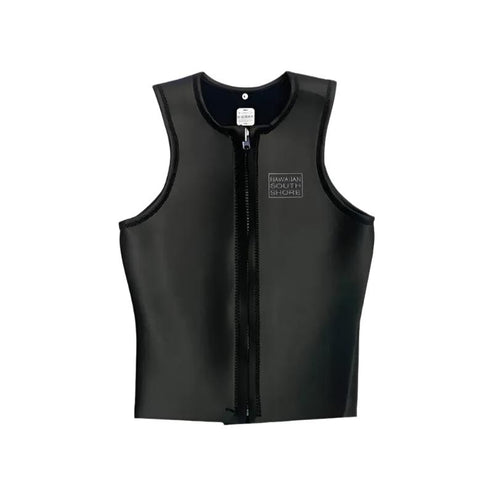
JPN Wetsuit Vest
Surf Accessories
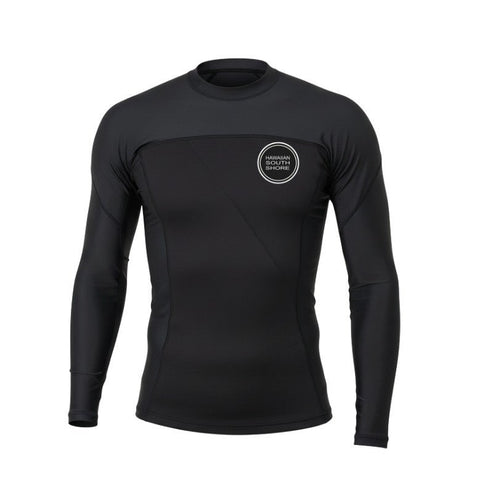
HSS Hybrid Wet/RashGuard

HSS Lycra Legging
SOLAREZ Surfboard Ding Repair

Epoxy Pro Travel Kit

Poly Pro Travel Kit
📸 January Customer Gallery
Mahalo for sharing your stoke with us!
Thank you for choosing Hawaiian South Shore! 🌊 We truly appreciate your support and trust in us for all your surfing needs. Whether it's finding the perfect board, upgrading your gear, or simply being part of our ohana, your loyalty means the world to us. Mahalo for riding this journey with us—we couldn't do it without you! 🤙

Want to be featured in next month's gallery? Tag us @hwnsouthshore on your next surf adventure!