
Hawaiian South Shore May 2026: Diamond Head, Aloha Fabric Halo Fins & CJ Nelson Boards

📋 In This Issue
When I heard that chime go off, I knew it was time to go home
I was probably seven or eight years old, running around outside with the other kids in my grandmother's neighborhood in Okinawa, completely lost in whatever we were doing. And then it happened — that chime. It came through the speakers mounted on the poles around the neighborhood, clear as anything. And just like that, without anybody's parent having to chase them down, every single kid started heading home. No argument. No "five more minutes." You just went.
I didn't think twice about it back then. It was just the way things worked. But years later, when I really started to understand what was behind all of it, I realized that chime was connected to something much bigger than a reminder to wash up for dinner.

A disaster system disguised as a daily routine
Those outdoor speaker systems you hear throughout Japan — and especially in rural Okinawa — are officially called bōsai musen, which translates roughly to "disaster administration wireless." The daily chimes, typically at noon and again around 5 p.m., aren't just reminders for kids to come home. They're daily tests of the emergency broadcast network. Every single day, the system plays its melody so that everyone in the community knows the speakers work. Because when a typhoon is bearing down or a tsunami warning goes out, there's no time to find out the equipment is broken.
More than 90 percent of cities, towns and villages across Japan have one of these systems. In rural Okinawa, it's nearly universal. And it does more than broadcast chimes — towns use it to announce community meetings, upcoming events, weather warnings, and anything else the neighborhood needs to know. It's the original push notification. No app required.
That origin matters. Okinawa's farming communities needed a way to coordinate the day — when to break for lunch, when to head in before dark. The PA system solved that. And over time it just became part of the rhythm of life. You still hear it today in the same places I heard it as a kid. The technology got upgraded. The purpose expanded. But the chime is still there.

Every household has a job — and everyone shows up
The speakers are just the voice. The real engine running underneath neighborhood life in Japan — especially in rural areas — is the jichikai or chōnaikai: the neighborhood association. Nearly every town and village has one, and in a 2007 national survey, 94 percent of people who lived in an area with one said they were a member.
This is not a homeowners association in the way most Americans think of one. There's no board sending violation letters about your grass. It's more like a small operating system for the neighborhood itself. The jichikai coordinates garbage collection, maintains streetlights, runs disaster drills, organizes festivals, and makes sure official notices from the city actually reach people — often through a physical clipboard called a kairanban that gets passed door to door down the street.
Inside the jichikai, the neighborhood is broken into smaller clusters — sometimes called han or kumi — of around five to fifteen households. Duties rotate through these clusters. One month your cluster handles the trash station. Another month you're out with the group for the big community cleanup. The responsibility moves around so it never falls on the same people every time.
And those community cleanup days are real. There's the mizo-sarae — everyone out with boots and shovels to clear the drainage ditches and irrigation canals. The kusa-kari — communal grass and weed cutting along roadsides and shared paths. The ōsōji — the big seasonal cleaning of community halls, shrine grounds, and shared spaces. One person from each household is expected to show up. Not because someone is forcing you. Because that's what you do.
If you're skimming — here's the short version
- The chimes you hear in Japan at noon and 5 p.m. are daily tests of the disaster emergency broadcast system — bōsai musen — used in over 90% of Japanese towns
- They started as a way to tell farmers what time it was — and grew into a community information network that still runs today
- The neighborhood association — jichikai or chōnaikai — is the backbone of daily community life; 94% of people in areas with one are members
- Households rotate duties: trash stations, cleanup days, disaster drills — the work is shared so no one carries it alone
- This is why streams and roadsides in rural Japan are clean — not because the government maintains them, but because the neighborhood does
Nobody waits to be asked twice
The thing that gets me about this system is how little it relies on anyone from the outside. The city government isn't cleaning those ditches. A contractor isn't trimming those roadsides. The people who live there are doing it — on a rotating schedule, with a shared understanding that this is just part of being a neighbor. And because the system is designed to spread the work around, it doesn't burn anyone out. You show up when it's your turn. You do your part. And then the next cluster takes over.
There's also something practical underneath the tidiness that I think gets missed. When you're out there every month or every season maintaining the drainage channels and clearing the shared spaces, you actually know your neighborhood. You know where the weak spots are. You know which areas flood first when a typhoon hits. You know your neighbors — their faces, their names, which house has an elderly person who might need checking on when things get bad. That's not incidental to disaster preparedness. That's the whole point of it.
I grew up hearing that chime and not understanding any of this. I just knew it meant go home. But looking back, it was one piece of a whole system of people who had figured out how to take care of their place without waiting for someone else to do it. Every household with a role. Every role rotating through. And a speaker on a pole making sure nobody missed a thing.
That's worth thinking about, wherever you are.
🌊
David
Hawaiian South Shore
May Customer Gallery
Mahalo for sharing your stoke with us!

Thank you for choosing Hawaiian South Shore! 🏄 We truly appreciate your support and trust in us for all your surfing needs. Whether it's finding the perfect board, upgrading your gear, or simply being part of our ohana — your loyalty means the world to us. Mahalo for riding this journey with us. We couldn't do it without you! 🤙
Tag @hwnsouthshore to be featured next month.
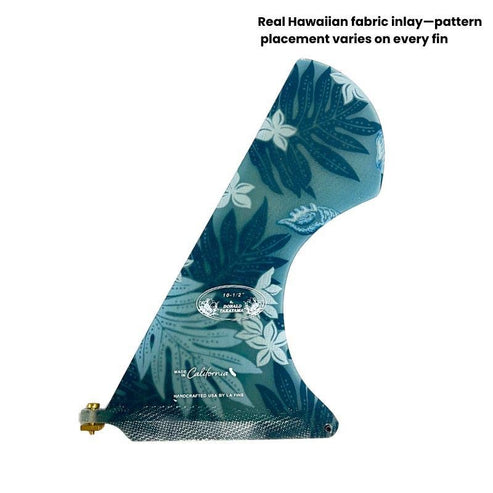
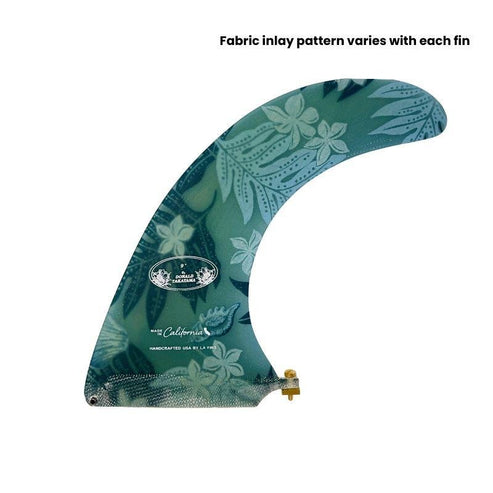
NEW — Aloha Fabric
Takayama Halo Center Fin — HSS Exclusive
Each fin is unique — crafted with authentic Hawaiian fabric, every pattern placement one-of-a-kind.

What makes it different
- Designed by Donald Takayama — premium longboard performance from a legendary shaper
- 2+1 fin system — combines traditional and modern fin technology
- Optimized for nose riding and performance longboarding
- Aloha fabric construction — every fin is one-of-a-kind
Also Available — Halo Fabric & DT Flex Fin
Member of the Month
James Enoka

James grew up surfing all over Hawaii — beach breaks, reef breaks, point breaks. Town and country, east and west. He bumped up to a 5'10 Sweet Potato 2 this year, made the switch to volcanic construction, and is still riding strong on the shortboards he loves.
How'd you get into surfing?
"My dad started pushing me into waves at a young age and we spent most of my younger years at the beach and around the ocean. But other sports took over and I didn't really get back into surfing until high school and I haven't stopped since. I've had years where life takes over and I don't surf as much. But it's always been there and for some reason, despite what may be going on, something naturally keeps pulling me back to surfing."
Do you do anything to stay in shape for surfing?
"I have an office job and I work long hours so I have to spend some time in the gym to offset the sedentary lifestyle. I try to do what I can to maintain my ability continue shortboarding. Some of my buddies have moved on to longboards but I love shortboard so I just do some strength training and some core work to keep up."
What do you love most about surfing here?
"I love the variety of surf we got here in the state. Grew up surfing all over the island and surf all over the state. Nothing like surfing everything from beach breaks, reef breaks, point breaks, we got it all. Onshore, offshore, rights, lefts, town, country, east and west. Shout out to my whole family, they all surfers, my Aliamanu surf crew, my Eastside boys we just trying to make it."
What's the latest board you grabbed from us?
"I got a 5'10 Sweet Potato 2. Bumped up to the 5'10 from the 5'8. We not getting any younger so up the volume and we not any lighter so switched to the volcanic construction to take care of the abuse the board will take."
How's it been surfing?
"I'll let you know. Haven't surfed it yet. But the 5'8 has been my go to for about 4 years. I'm sure the 5'10 will be just as fun. For somebody my size 235 lbs it's the closest to shortboarding that it gets for me."
What fins are you running?
"Dan Mann FW FCSII large thruster fin setup works perfect for the board. With Firewire switching to Futures, I'm looking to try out the Vector 3/2 Blackstix+ large thruster set."
When you're not surfing, what are you up to?
"If I'm not surfing I go golfing. I like traveling domestic and abroad and I like checking out new foodie spots."
Featured Board
CJ Nelson Chameleon
A hybrid longboard from CJ Nelson and Ryan Engle — built for surfers who refuse to choose between classic logging and high-performance.

▶ CJ Nelson explains the Chameleon — watch on YouTube

The CJ Nelson Chameleon is a hybrid longboard designed by CJ Nelson and Ryan Engle to bridge classic logging and high-performance longboarding in one shape. It noserides like a traditional log and turns off the tail like an HP — built for the surfer who refuses to choose between the two.
One board. Two distinct surfing styles. Built for the surfer who wants both.
More from the CJ Nelson Collection


In Case You Missed It
Customer Surfboard Reviews
Real reviews from real customers — watch what people are saying about the boards and fins they're riding.


South Shore Surf Guide Series
Diamond Head
A series of reefs below Oahu's most iconic crater — and one of the most consistent surf zones on the island.

Mid-lengths, high-volume shortboards, and high-performance longboards are the best tools for the soft, sectiony peaks along this stretch. The Takayama Flex Fin offers extra drive to help longboards get around the closeout sections — a small piece of gear that makes a real difference in this lineup.
The full guide covers wind, conditions, the best boards for the spot, and a downwind/foiling note on the Kaiko'os Run.