
>Hawaiian South Shore Newsletter — March 2026

📋 In This Issue
- 📝 Did You Know This About CPR? — A Message from David
- 🏄 Firewire Mindcraft iBolic 2.0 — New for 2026
- 🎥 HSS Interviews — Larry Allison & Noah on Takayama Fins
- 🎯 HSS Exclusive — Takayama Fins
- 📖 The Innovative Takayama Halo Fin System
- 🏄 Harley Ingleby Boards — Now In Stock
- 🧳 Veia Board Bags — Travel Ready
- 🌊 JPN Wetsuits — HSS Exclusive, Back In Stock
- 📸 March Customer Gallery
Did You Know This About CPR?
I was watching Diary of a CEO with Dr. Mike the other day and he said something that stopped me cold.
The goal of CPR isn't to bring someone back to life.
Wait, what?
Turns out everything I thought I knew from TV is wrong. When someone needs CPR, they're clinically dead. No pulse. Not breathing. And what you're actually doing is buying time—manually squeezing the heart to keep whatever oxygen is left circulating to the brain and vital organs until paramedics arrive.
You're not bringing them back. You're keeping them alive long enough for the professionals with the real equipment to do that.
And because they're already clinically dead, you can only help—you can't make it worse. That fear about "doing it wrong"? Shouldn't stop you.

Call First, Then Compressions
Before you even touch the person, call for help. And don't just yell "Someone call 911!"
Point at a specific person. "You—call 911 now."
Because if you don't, everyone assumes someone else is doing it. Those seconds matter.
Something That Hit Hard
Women are less likely to receive CPR from bystanders. People hesitate because they're uncomfortable or worried about how it looks.
In a life-or-death moment, that hesitation costs lives.
No More Mouth-to-Mouth
Here's the other thing: the old mouth-to-mouth method is basically gone for bystanders.
Japanese researchers found that chest compression-only CPR combined with a defibrillator led to over 40% survival rates with good brain function—one of the highest ever reported. The American Heart Association now recommends hands-only CPR for adults: just push hard and fast in the center of the chest at 100–120 compressions per minute (the beat of "Stayin' Alive").
Rescue breaths interrupt compressions and weaken circulation. Most cardiac arrest victims already have enough oxygen in their blood—the key is circulating it.
For kids and drowning victims, rescue breaths still matter because their cardiac arrest usually stems from breathing problems. But for most adults? Just compressions.
AEDs Are Everywhere
One thing Dr. Mike didn't mention: public defibrillators are everywhere now. Airports, malls, gyms, schools. They're designed for anyone to use and literally walk you through it.
When bystanders used hands-only CPR with a public AED, survival rates jumped to 46% compared to 39.9% with traditional CPR. If you see one, use it.
Do They Even Teach This?
I haven't taken CPR training in years. And now I'm wondering—do they actually emphasize the "buying time" concept or just teach the mechanics?
Because understanding what you're doing and why changes everything. It's not about being a hero. It's about giving someone a chance.
Why I'm Sharing This
This isn't medical advice. But it shifted how I see CPR, and I thought it was worth passing along.
Most of us freeze because we're scared we'll do it wrong. But if the choice is between doing something and doing nothing? Do something.
The full interview is "Dr Mike: The Top 10 Lies Health Experts Have Told You!" on Diary of a CEO if you want to watch it.
And if you've been thinking about getting CPR certified—or recertified like I need to—maybe this is the nudge. Not to be a hero. Just to be ready if someone needs a few extra minutes.
Sometimes that's everything.
Did this surprise you too? Let me know what you think.
🌊
David
Hawaiian South Shore
📬 Want new products and weekly updates every Friday? Check out our Aloha Friday newsletter!
Get Our Weekly Newsletter →Featured Board · New Model 2026
Firewire Mindcraft iBolic 2.0

A minimalist design optimized for pure function—designed by Daniel Thomson (Tomo) in collaboration with Kelly Slater.
The Mindcraft was built to connect a surfer to their equipment like never before. The outline is a seamless blend of straightened and elliptical curves with a torpedo nose—forgiving in the most critical moments, superior for performance surfing outside the jersey. A bump wing round tail completes the symmetry, allowing tight turns at speed with exceptional control.
The bottom contours are smoother and more continuous than previous Tomo models—a single to double concave that keeps the board engaged with the wave face while delivering the lively response his designs are known for. Moderate performance rocker means speed in a wide range of conditions.
Built with five boxes, the Mindcraft works equally well as a quad or thruster. Kelly typically rides it with his Endorfins KSR rake template or KS1 setup. Like many of Tomo's snub nose parallel outline shapes, the volume is distributed throughout—you can ride this several inches shorter than your standard shortboard.
Built on iBolic 2.0 construction: flex controlled at the rails using 2lb EPS foam with bio resin lamination. The 2026 version of a board worth knowing.
In Case You Missed It
David sat down with Tomo to talk about the Mindcraft. Watch the interview:

HSS Interviews
Conversations with Larry & Noah
Two interviews straight from the source — the people behind the Takayama fins.


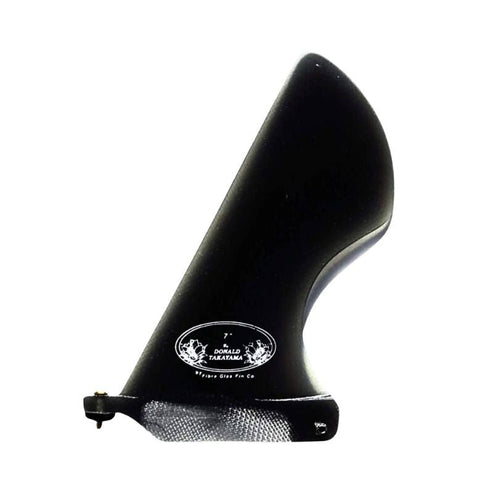
HSS Exclusive
Takayama Fins
Donald Takayama's fins. Available only at Hawaiian South Shore.



From the Blog
The Innovative Takayama Halo Fin System

Donald Takayama designed the Halo fin system with one goal: make bigger boards easier to turn without giving up speed. The result is one of the most genuinely innovative fin configurations in surfing—and one that's still misunderstood by most surfers who haven't tried it.
The key is reverse-oriented geometry. Where standard fins have a rounded leading edge and vertical trailing edge, the Halo flips this. The reversal creates a hydrofoil effect—lift while reducing drag in turns—letting the rails release and re-engage with far less effort. The center fin and side fins work as an integrated unit, not independent components.
Tighter turning radius, maintained speed through turns, smoother rail-to-rail transitions, improved nose riding. Works on longboards 8'6" and above, mid-lengths 7'6" to 8'6", and SUPs. Each fin is individually handcrafted—current production overseen by Noah Shimabukuro and Charles Kirkley, both trained directly by Takayama.
Center fins from 6.5" to 10.5". Futures and FCS-compatible side bites. Hawaiian South Shore is one of few authorized dealers globally. We've written the complete guide—sizing, configurations, wave conditions, and which board styles benefit most.
We also sat down with Noah on the Halo Fin

Want to hear what it's actually like to ride them? Check out the most recent reviews:

Now In Stock
Harley Ingleby Boards
Australia's most celebrated longboard shaper. Built on Thunderbolt Red construction.


Travel Ready
Veia Board Bags
John John Florence's travel bag of choice. Built for surfers who take their boards seriously.


HSS Exclusive
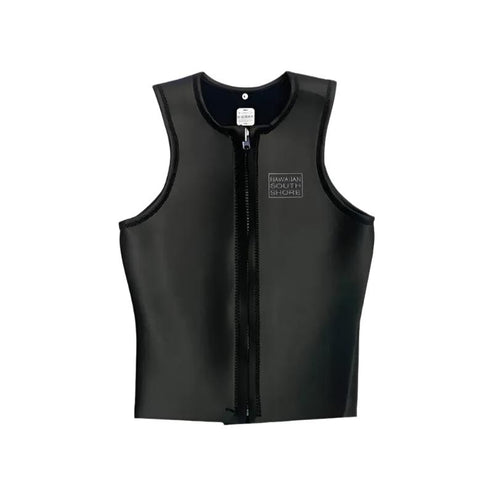
JPN Wetsuits
BACK IN STOCK
Only at Hawaiian South Shore. Designed in Hawaii for Hawaii water.

March Customer Gallery
Mahalo for sharing your stoke with us!

Thank you for choosing Hawaiian South Shore! 🏄 We truly appreciate your support and trust in us for all your surfing needs. Whether it's finding the perfect board, upgrading your gear, or simply being part of our ohana—your loyalty means the world to us. Mahalo for riding this journey with us. We couldn't do it without you! 🤙
Want to be featured in next month's gallery? Tag us @hwnsouthshore on your next surf adventure!