
Hawaiian South Shore April 2026 Newsletter

📋 In This Issue
I grew up watching moai — and I didn't understand it until now
When I was a kid visiting family in Okinawa, there was always this moment at my grandmother's house where everything shifted. The kids got sent outside, and the adults sat down together like something serious was about to happen. Formal. Everyone with a role. And grandma — always grandma — had the final word after everyone had their say. That's just how it worked in Okinawa. The matriarch holds the room.
What I didn't fully understand then was that what I was watching had a name. It was called moai — pronounced mo-eye — and it's one of the oldest traditions in Okinawa. I heard the word my whole childhood. I just didn't grasp what it actually was until I sat down as an adult and really looked into it.
And honestly, once it clicked, I couldn't believe I'd been sitting on the outside of something this meaningful without seeing it clearly.

A financial circle built entirely on trust
At its core, moai started as a village financial system — a way for people to pool money locally when there were no banks to turn to. If you needed capital to buy land, cover an emergency, or handle something big, your moai was how it happened. The tradition goes back centuries in Okinawa.
The way it works is simple: a small group — typically five to ten people — meets regularly and each person contributes a fixed amount into a shared pot. At each meeting, one member receives the full amount. You rotate through until everyone has received once, and then the cycle resets. No interest. No application. No approval process. Just people who have made a commitment to each other and keep it.
What makes it work isn't the structure — plenty of financial arrangements have structure. What makes it work is the trust. Everyone shows up. Everyone pays in. Nobody skips because they don't feel like it. And if someone in the group hits a real crisis — illness, loss, something unexpected — the group steps in outside the normal rotation. That part isn't written anywhere. It's just understood.
My relatives still do this today. Same concept, same commitment, same understanding that what happens in the moai stays in the moai. You don't talk about other people's situations outside the circle. You bring things to the group when they need to be handled, and you handle them together. That discretion is what makes the trust possible in the first place.
If you're skimming — here's the short version
- Moai is a centuries-old Okinawan rotating savings circle — small groups pool money so each member receives a lump sum in turn
- No banks, no interest, no applications — it works because the trust between members is real and long-term
- Groups of 5 to 10 people; about half of all Okinawans participate — many groups last 90+ years
- What starts as a financial circle becomes a lifelong support system — social, emotional, and practical
- Blue Zone researchers link moai directly to Okinawa's exceptional longevity — Okinawan women average 90 years

It was never just about the money
Over time, moai grew into something larger than the financial rotation it started as. When you meet with the same small group of people consistently — for years, for decades — you become each other's safety net in every sense. The money is still there, but so is everything else. People in a moai know they are not going through things alone. And that security, researchers say, changes everything.
Blue Zone scientists who study why Okinawa produces so many people who live past 100 keep pointing back to moai. Not just the diet, not just the activity level — the connection. Chronic stress drops when you know your circle will move before you have to ask. Isolation, which can shorten life expectancy by years, isn't something moai members experience the same way. The group keeps showing up.
What I find most striking is that none of it depends on outside help. No institution, no government program, no application. Just a circle of people who decided to be accountable to each other — and kept that commitment for the rest of their lives. That's not a system. That's a culture.

How a moai works — the rotation, the commitment, and why researchers think it's one of Okinawa's longevity secrets. Sources: Blue Zones, Geriatrics & Gerontology International.
I grew up in that culture without fully understanding it. Watching my grandmother run those meetings. Watching adults take it seriously. Watching trust get built the slow way — not through contracts, but through consistent showing up, year after year.
That's something worth thinking about, wherever you are.
🌊
David
Hawaiian South Shore
April Customer Gallery
Mahalo for sharing your stoke with us!

Thank you for choosing Hawaiian South Shore! 🏄 We truly appreciate your support and trust in us for all your surfing needs. Whether it's finding the perfect board, upgrading your gear, or simply being part of our ohana — your loyalty means the world to us. Mahalo for riding this journey with us. We couldn't do it without you! 🤙
Member of the Month
Jordan Wong

Jordan got into surfing the way a lot of us did — peer pressure from the right people at the right time. He's been riding his Firewire Seaside ever since, logging sessions wherever the water cooperates. When he's not in the water, he's jumping out of planes at Skydive Hawaii. Keeps things interesting.
How'd you get into surfing?
"All the cool kids were surfing so I jumped on the bandwagon. The motivation for surfing comes from just wanting something fun that keeps me active and outdoors."
Ever take time off from it?
"I have taken time off — only for a few years when I was on the mainland, not really near anywhere surfable. But I came back to it."
Do you do anything to stay in shape for surfing?
"Mostly just daily stretching and exercise at home."
What do you love most about surfing here?
"There are waves somewhere all the time — you've just gotta find them."
What's the latest board you grabbed from us?
"There are no hydrofoil boards in the shop yet — but hopefully soon, right? 😂 Your guys' accessories are always fully stocked, though."
How's the surfing been lately?
"Surfing has been fun — always is and always will be."
What fins are you running?
"I usually run the Rob Machado quad setup. Works great on the Firewire Seaside."
When you're not surfing, what are you up to?
"When I'm not surfing, I'm usually working at Skydive Hawaii."
When Jordan's not in the lineup, he's working at Skydive Hawaii — one of the best skydiving operations in the state. If you've ever thought about making a jump, or want to book an experience for someone special, check them out at skydivehawaii.com.
Featured Board
Lost California Mid
Mark Richards × Matt "Mayhem" Biolos — a mid-length built for surfers who aren't ready to slow down.

▶ Mark Richards breaks down the CA Mid — watch on YouTube

The California Mid is a collaboration between Mark Richards and Matt "Mayhem" Biolos — built for surfers who want the speed and looseness of the CA-Twin with more paddle power and length underfoot. It surfs bigger than it looks and forgives more than a shortboard ever will.
It excels in anything from knee-high to overhead — the kind of everyday surf Hawaii delivers most of the year. Low rocker and extra length mean it paddles in early, making it ideal for punchy reef break or softer rolling surf where positioning matters more than raw power. The pulled-in tail and twin+1 setup let it snap off the top when the wall is there, and the extra glide keeps it moving through sections that would stall a shorter board.
This board meets surfers where they are and lets them keep surfing the way they like.
In Case You Missed It
Customer Surfboard Reviews
Real reviews from real customers — watch what people are saying about the boards they're riding.


Gear Deep Dive
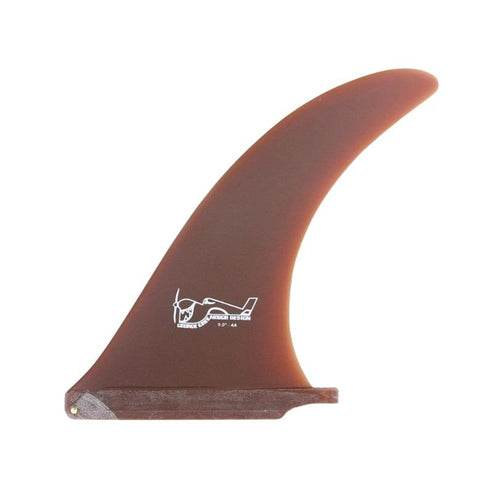
The True Ames Greenough 4A
A legacy fin that still sets the standard for single-fin performance.
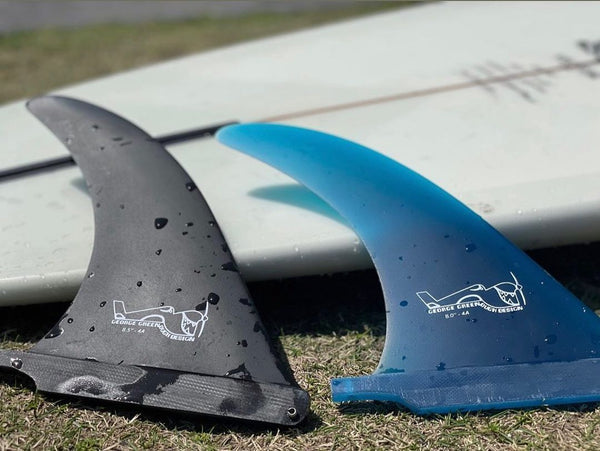
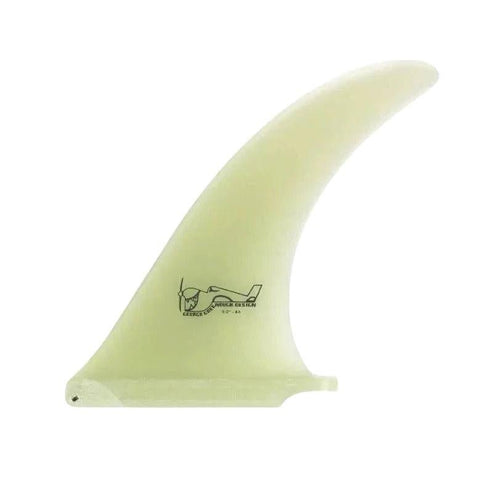
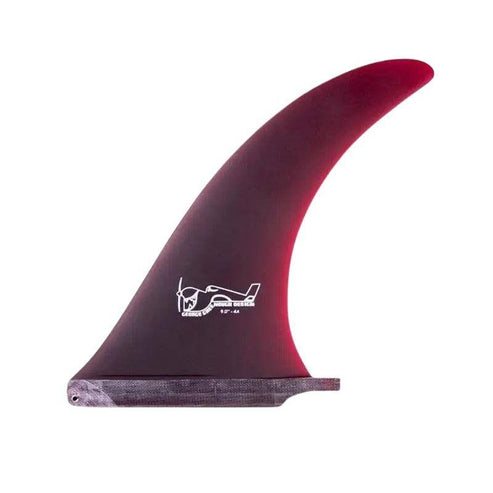
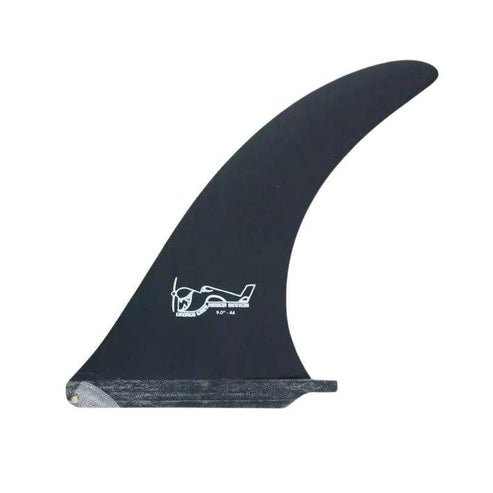
The Greenough 4A has been a benchmark in single-fin performance for decades. Designed by George Greenough and brought to market by True Ames — founded by Chuck Ames in 1979 — this fin represents a collaboration that changed how experienced surfers think about what a single fin can do.
Its flex pattern, rake, foil shape, and wide base aren't random design choices — each element works together to generate speed, hold through powerful sections, and give the surfer a responsive feel that most single fins can't match. It excels in overhead surf, point breaks, and the kind of powerful Hawaiian reef conditions where control and drive matter most.
What makes it different
- Flex pattern — engineered for energy transfer and responsiveness through turns
- Rake & sweep — exceptional hold and drive in critical sections
- Foil shape — minimizes drag while maximizing lift; fast and responsive
- Wide base — stability and hold in larger surf and powerful turns
In Hawaiian conditions — from the long walls of Mākahal on the West Side to the critical sections of the North Shore — the 4A has proven itself over and over. Sizing runs 7.5" to 10", with the right choice depending on board volume, surfer weight, and wave size. Available in fiberglass and Volan.
For the full breakdown — history, sizing guide, ideal surfer profile, and how it compares to other single fins — read the complete article on the blog.
True Ames Greenough 4A — Back in Stock

Watch the True Ames Greenough 4A Video →
HSS Exclusive
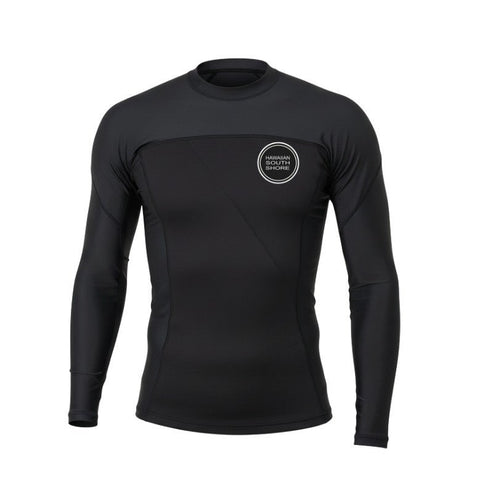
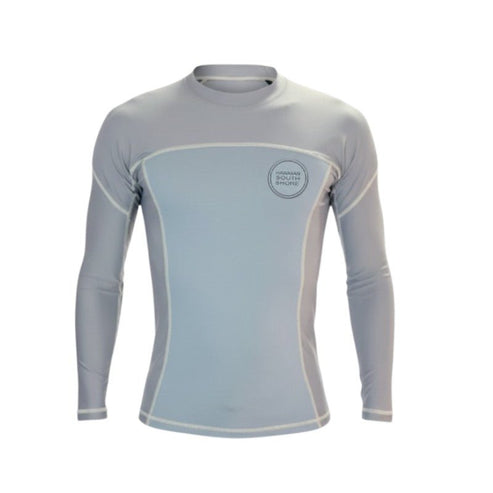
Hybrid Wet/Rashguard — Back in Stock
Our store-exclusive hybrid is back in three styles. Built for Hawaii's water — warm enough to block the wind, light enough to move in.

What Customers Are Saying
